
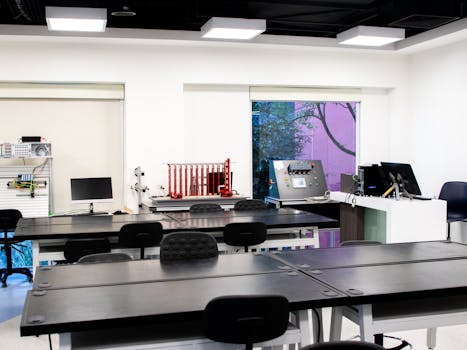
Remember those old sci-fi movies where labs were always depicted as these rigid, unchanging monoliths? Rows of fixed benches, immoveable fume hoods, and a general sense of “what you see is what you get.” For a long time, that was pretty much reality in most research and development environments. But let’s be honest, science is anything but static. It’s a constant dance of discovery, adaptation, and sometimes, a complete pivot in direction. So, why should our physical workspaces be stuck in the past? That’s precisely where the magic of modular lab furniture comes into play, transforming static spaces into dynamic powerhouses of innovation.
Think about it: you’ve just landed a breakthrough grant, and suddenly your team needs to double in size, or your focus shifts from molecular biology to heavy-duty chemical analysis. What happens to your perfectly laid-out, but now entirely unsuitable, lab? If you’re working with traditional, fixed furniture, you’re likely facing expensive, time-consuming renovations, significant downtime, and a whole lot of headaches. This is the pain point that modular lab furniture elegantly solves, offering a far more intelligent and adaptable approach.
Adapting to the Unpredictable: Why Flexibility is King
The pace of scientific advancement is relentless. What’s cutting-edge today might be yesterday’s news in a few years, requiring new equipment, different workflows, or entirely new experimental setups. This is where the inherent flexibility of modular systems truly shines. Instead of ripping out walls or investing in costly custom builds, you can reconfigure your lab space with relative ease.
#### Reimagining Your Layout on the Fly
One of the most compelling benefits is the sheer ease of reconfiguration. Need to create a dedicated area for a new piece of sensitive equipment? Want to optimize traffic flow for a larger team? Modular components – from benchtops and cabinets to specialized supports – can be rearranged, added, or removed without a major overhaul. I’ve seen labs that have gone from a standard research setup to a high-throughput screening facility, and back again, all thanks to a smart modular design. It’s like building with sophisticated LEGOs, but for serious science!
#### Supporting Diverse Equipment Needs
Modern labs are a symphony of specialized instruments, each with its own footprint and specific requirements. Modular systems are designed with this diversity in mind. You can get adjustable-height benches for ergonomic comfort during long experiments, specialized vibration-dampening tables for microscopy, or integrated power and data ports that can be easily relocated. This means your lab isn’t just a place to work; it’s a tailored environment that perfectly complements your technology.
The Cost-Benefit Tango: Long-Term Value Over Upfront Expense
It’s easy to look at the initial investment in modular lab furniture and compare it to traditional options. However, this is where looking at the total cost of ownership becomes crucial. While the upfront cost might sometimes be a tad higher, the long-term savings and added value are substantial.
#### Minimizing Downtime, Maximizing Productivity
When your lab needs to adapt, downtime is your enemy. Every day your equipment is idle, or your team is displaced, represents lost research time and potential revenue. Modular systems drastically reduce this. Reconfigurations can often be completed over a weekend or even overnight, meaning your lab is back to full operational capacity much faster. This continuity is invaluable in fast-paced research environments.
#### Future-Proofing Your Investment
Investing in a fixed lab layout is a bit like buying a suit that perfectly fits you today, hoping it will still be your go-to attire in ten years. Science, and therefore lab needs, change. Modular furniture allows your lab to evolve with you. When new regulations emerge, or a new research paradigm takes hold, you won’t be scrambling to rebuild. You can simply adapt. This future-proofing aspect is a huge financial advantage, preventing obsolescence and the need for costly wholesale replacements down the line.
Beyond Functionality: Enhancing Safety and Ergonomics
A laboratory isn’t just about the experiments; it’s about the people conducting them. Modular lab furniture also plays a critical role in creating a safer, more comfortable, and ultimately, more productive working environment.
#### Creating Safer Work Zones
With modular components, you can design dedicated zones for specific hazardous activities. For example, creating contained areas for highly volatile chemicals or ensuring adequate ventilation for aerosol-generating procedures becomes much more straightforward. The ability to integrate safety features like spill containment, integrated fume extraction, and easy-to-clean surfaces into the modular design contributes significantly to a safer lab.
#### Prioritizing User Comfort and Well-being
Ergonomics is no longer a buzzword; it’s a necessity for sustained productivity and employee well-being. Modular benches often offer adjustable heights, allowing individuals to switch between sitting and standing positions throughout the day. This can reduce fatigue, prevent musculoskeletal issues, and improve focus. Furthermore, thoughtful layout planning with modular units can optimize workflow, minimizing unnecessary movement and strain.
The Design Process: Collaboration is Key
Choosing modular lab furniture isn’t just about buying off-the-shelf components; it’s about a collaborative design process that leverages the system’s adaptability.
#### Working with Experts to Maximize Potential
Reputable modular furniture suppliers don’t just sell products; they offer expertise. They can help you analyze your current and future needs, understand the vast array of available components, and design a layout that’s not only functional but also aesthetically pleasing and compliant with all relevant standards. This partnership is key to unlocking the full potential of a modular system. They can guide you through choosing the right materials for your specific applications and ensuring optimal workflow for your team.
#### Integrating Technology Seamlessly
In today’s lab, technology is paramount. Modular furniture is designed to integrate power, data, and gas utilities seamlessly. This means you can have readily accessible outlets and connections where you need them, without messy cable runs or costly electrical work. Planning this integration from the outset with your modular system will save you immense hassle later on. Think about the ease of adding new analytical instruments that require multiple power sources and data links – with modularity, it’s far less disruptive.
Wrapping Up: Is Your Lab Ready to Evolve?
So, are you still dreaming of those static, unchangeable lab benches from yesteryear? Or are you ready to embrace a more dynamic, adaptable, and ultimately, more powerful future for your scientific endeavors? Modular lab furniture isn’t just a trend; it’s a fundamental shift in how we design and utilize laboratory spaces. It’s about empowering innovation by providing a workspace that can keep pace with the ever-evolving demands of science.
The question isn’t just if you should consider modular lab furniture, but rather, how quickly can you begin to reap its benefits. What’s holding you back from a lab that can truly grow and change with your research?